While this is a positive in the long run, it does create some added costs in the short term.
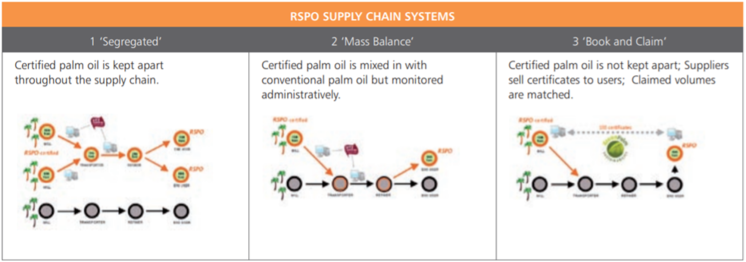
A 2018 European Commission study on the environmental impact of palm oil consumption found there was a $30/tonne premium for segregated certified palm oil, which can have a negative impact on gross margins.
There are opportunities for companies to mitigate this cost through vertically integrating their supply chain and sourcing their own palm oil sustainably.
This means they can better integrate smallholder farmers into their value chain, shorten supply chains and improve traceability, in the process reducing operational costs and improving margins.
Lastly, investors have a duty to engage with companies and encourage them to disclose both the impact they are having on deforestation throughout their supply chain, and the measures they are taking to address. This will allow investors to understand the true implications of their portfolio holdings and encourage the spread of more sustainable palm oil sourcing practices.
Case Studies
Below are some case study examples of how these themes can be considered within ESG analysis:
Colgate Palmolive is a US consumer products company and a global leader in oral care. Palm oil is an input into a number of their consumer products and they use 173,753 tonnes annually (2019). The business estimates it spends $11m extra annually on acquiring physically certified palm oil, not associated with deforestation. During our engagement meeting in August 2021. the business explained that sustainable sourcing contributed to lower gross margins over the last year, but they saw this as a necessity for their sustainable strategy.
Unilever, a consumer goods business, estimates that they have made between €99m-€160m in annual sales and reduced costs from vertically integrating their palm oil supply chain, which shortens the supply chain and improves traceability. We see more upside potential in the long-term for consumer products businesses that vertically integrate their palm oil supply chain and strive for 100% certified palm oil.5
Procter and Gamble is a US consumer goods company that uses 188,034 tonnes of palm oil annually (2019). On 13th October 2020, we voted against management in favour of an annual deforestation report so the market could better understand the business’s strategy on managing its supply chain's impact on deforestation.
Conclusion
Overall, we believe investors should look for and encourage best practice in relation to sourcing sustainable palm oil, while remaining mindful of the financial implications of these best practices.
IMPORTANT INFORMATION
This marketing document contains information or may incorporate by reference data concerning certain collective investment schemes ("funds") which are only available for distribution in the countries where they have been registered. This document is for the exclusive use of the individual to whom it has been given and may not be either copied or transferred to third parties. In addition, this document is not intended for any person who is a citizen or resident of any jurisdiction where the publication, distribution or use of the information contained herein would be subject to any restrictions or limitations.
The contents of this document are provided for information purposes only and shall not be construed as an offer or a recommendation to subscribe for, retain or dispose of fund units, shares, investment products or strategies. Before investing in any fund or pursuing any strategy mentioned in this document, potential investors should consult the latest versions of the relevant legal documents such as, in relation to the funds, the Prospectus and, where applicable, the Key Investor Information Document (KIID) which describe in greater detail the specific risks. Moreover, potential investors are recommended to seek professional financial, legal and tax advice prior to making an investment decision. The sources of the information contained in this document are deemed reliable. However, the accuracy or completeness of the information cannot be guaranteed, and some figures may only be estimates. There is no guarantee that objectives and targets will be met by the portfolio manager.
All investment involves risks. Past performance is not indicative or a guarantee of future returns. Fund values can fall as well as rise, and investors may lose the amount of their original investment. Returns may decrease or increase as a result of currency fluctuations.
This document is issued by the following entities: in the UK: Mirabaud Asset Management Limited which is authorised and regulated by the Financial Conduct Authority under firm reference number 122140.; in Switzerland: Mirabaud Asset Management (Suisse) SA, 29, boulevard Georges-Favon, 1204 Geneva, as Swiss representative. Swiss paying agent: Mirabaud & Cie SA, 29, boulevard Georges-Favon, 1204 Geneva. In France: Mirabaud Asset Management (France) SAS., 13, avenue Hoche, 75008 Paris. In Spain: Mirabaud Asset Management (España) S.G.I.I.C., S.A.U., Calle Fortuny, 6 - 2ª Planta, 28010 Madrid. The Prospectus, the Articles of Association, the Key Investor Information Document (KIID) as well as the annual and semi-annual reports (as the case may be), of the funds may be obtained free of charge from the above-mentioned entities.