

Summary
Growth is beginning to broaden, with returns moving beyond a narrow group of US mega-cap technology companies.
The transatlantic growth gap is narrowing, while Europe continues to trade at a meaningful valuation discount.
Smaller companies remain a powerful source of long-term growth, supported by entrepreneurial management, agility and strong earnings potential.
After a period of extreme underperformance, conditions are shifting, with improving sentiment, low investor positioning and attractive valuations supporting a potential catch-up.
For the better part of a decade, global equity investing has been defined by a singular, record-breaking trade: US large-cap technology. The narrative was simple and, for a long time, indisputable. If you wanted growth, you looked to Silicon Valley. If you wanted safety, you looked to the trillion-dollar balance sheets of the Magnificent 7. This concentration has been so effective that it has reshaped the definition of a growth stock, leading many to believe that innovation is something that can only be achieved on the top rung of the S&P 500.
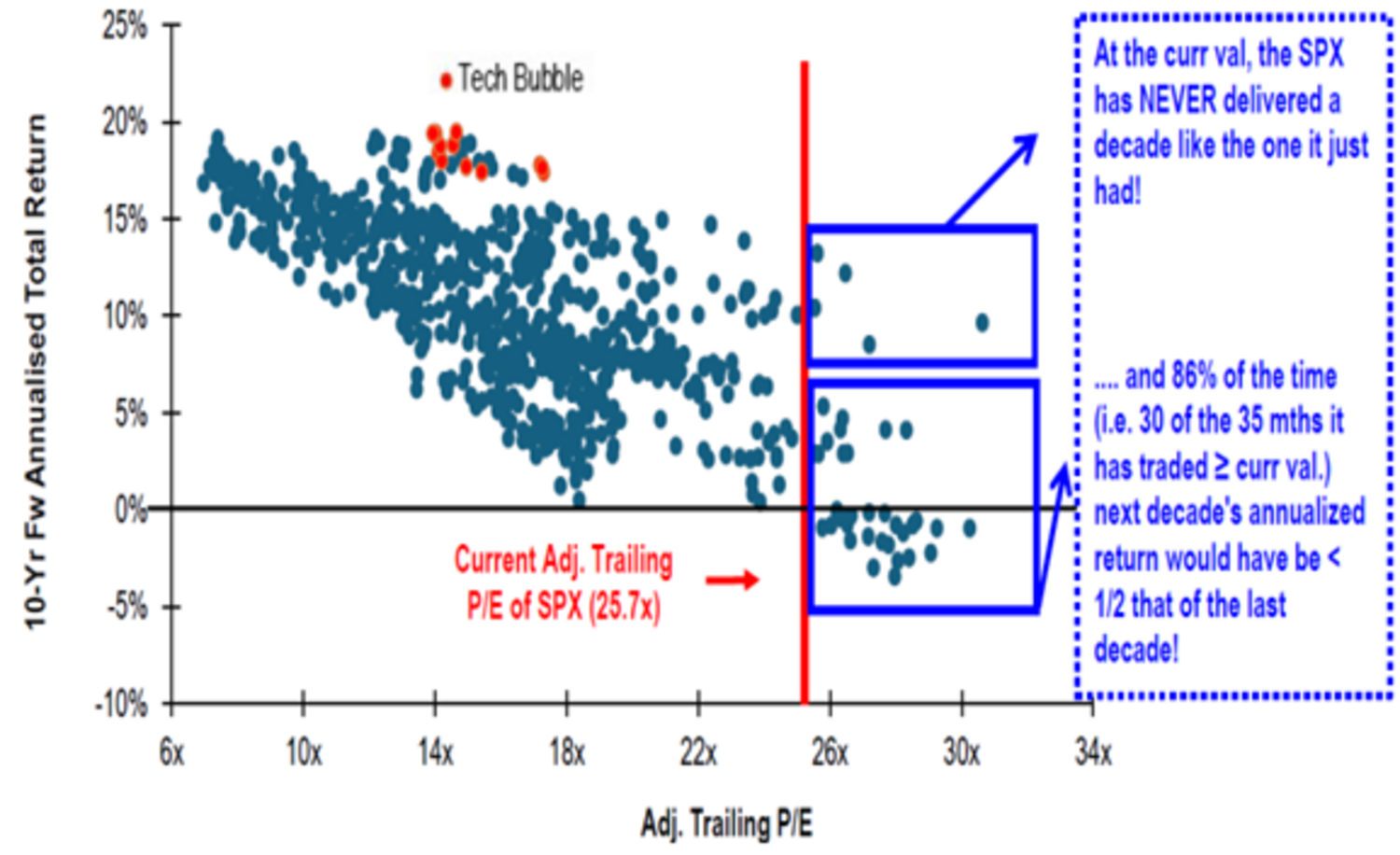
But markets rarely move in a straight line forever. As valuations for US tech giants reach levels that leave little room for error, history suggests the “easy money” has been made. The most compelling opportunities are no longer found in the crowded centre of the market. Instead, we believe they are hiding in the overlooked corners of Europe’s small-cap universe. For the discerning investor, this isn’t just a value play or a contrarian bet; it is a recognition that the global growth story is beginning to broaden.
S&P 500 FW 10-yr returns vs trailing PE valuations
The prevailing myth about European equities is that they are a legacy trade – a collection of banks, utilities, and old-world industrials destined for stagnation. This perception is a fundamental misreading of the ecosystem. While Europe’s large-cap indices may lean toward the traditional, its small and mid-cap segments are the engines of the continent’s innovation. These are the ‘Niche Champions’ – highly specialised, agile companies that dominate niche global markets. From high-precision industrial automation to cutting-edge medical diagnostics, these businesses often command a dominant market share of their respective global niches while remaining virtually unknown to the average retail investor.
Small vs. mid vs. large-cap indices by region – from inception of the newest index to current
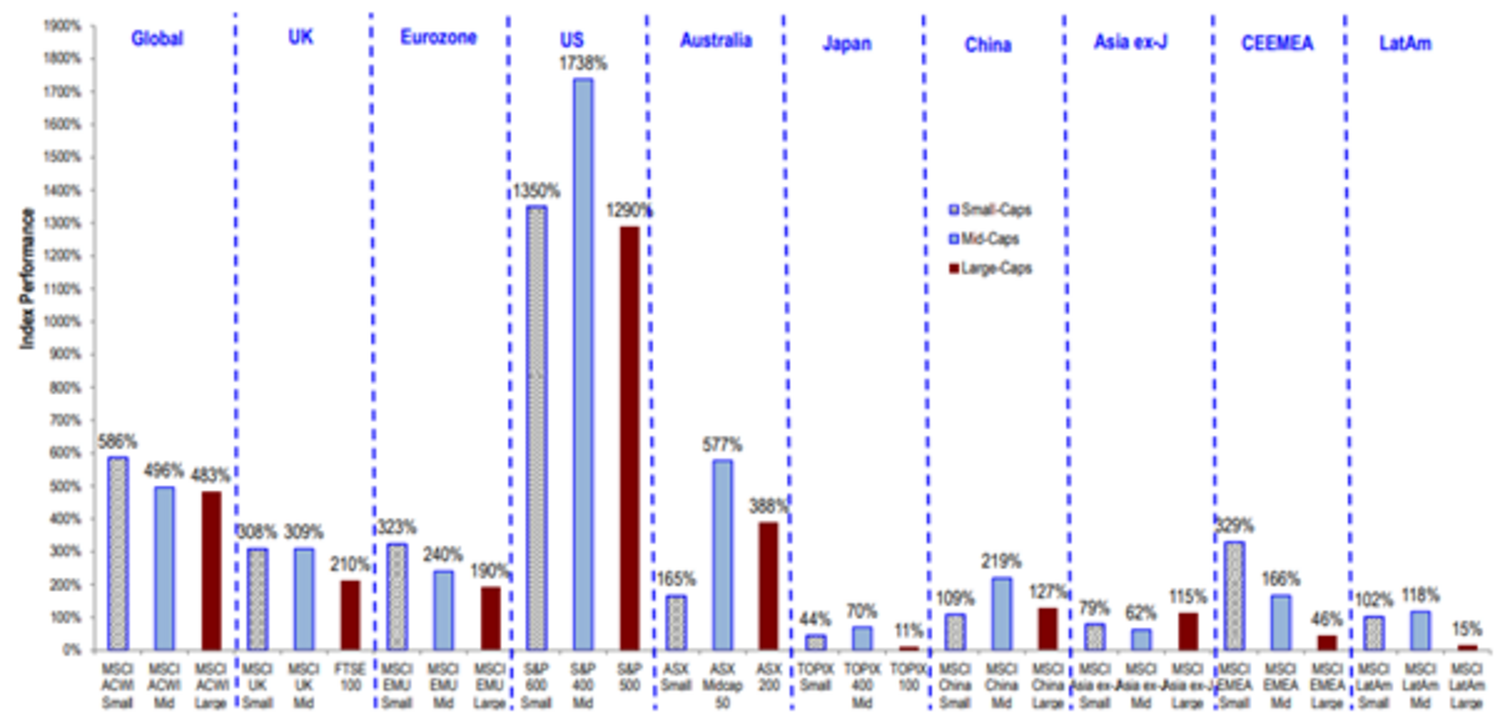
The strength of these companies lies in their unique operational scale. Unlike a trillion dollar behemoth that requires a seismic shift in the global macro environment to move the needle, a USD500 million specialised manufacturer can significantly grow its earnings simply by capturing a single new territory or launching a breakthrough product. This agility allows them to act as a pure play on the European economic recovery. As they often operate with relatively domestic footprints and streamlined supply chains, they remain largely insulated from the headline geopolitical volatility and trade tensions that frequently buffet the global mega-caps. By operating below the radar, they offer a growth profile that is both high conviction and remarkably resilient.
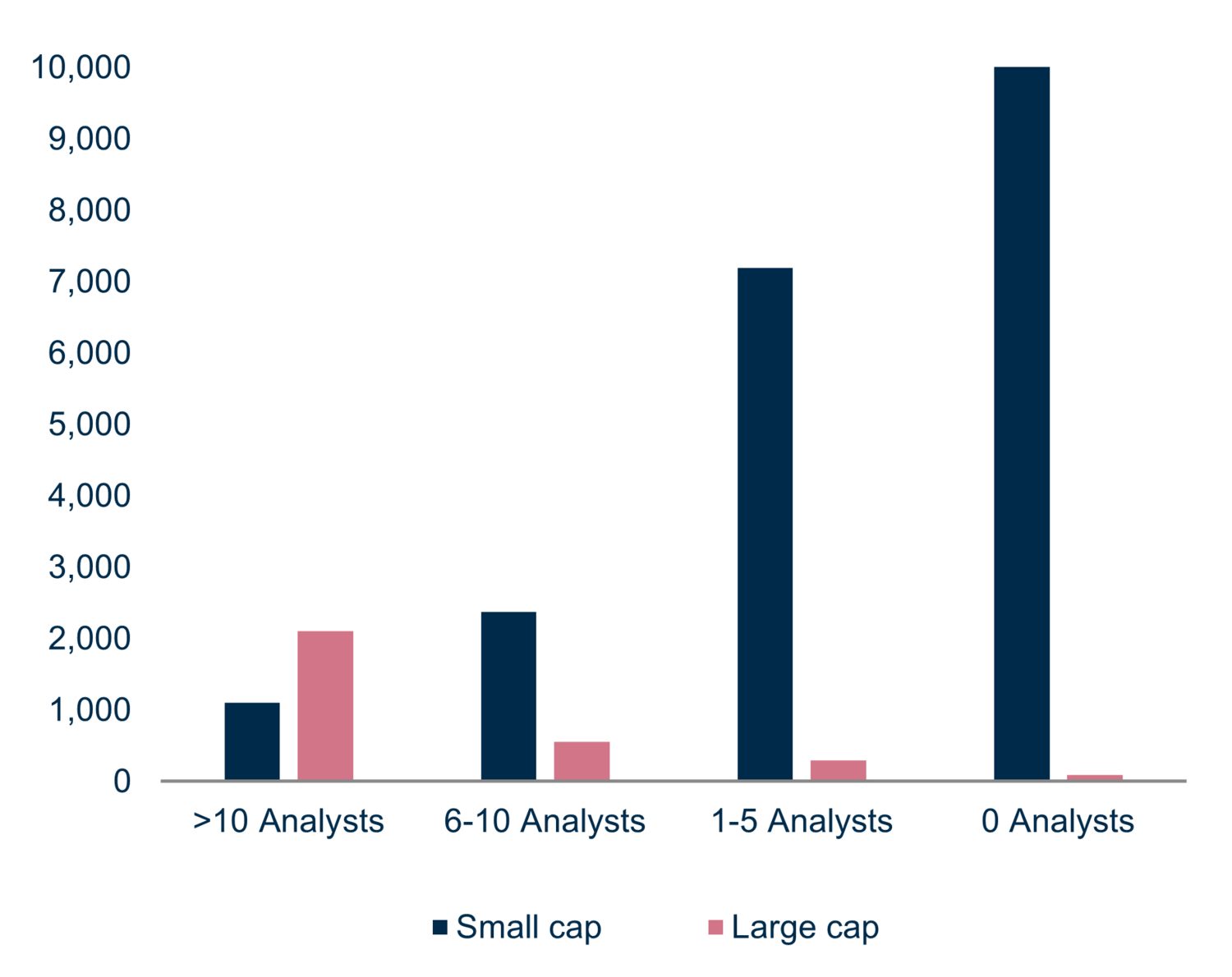
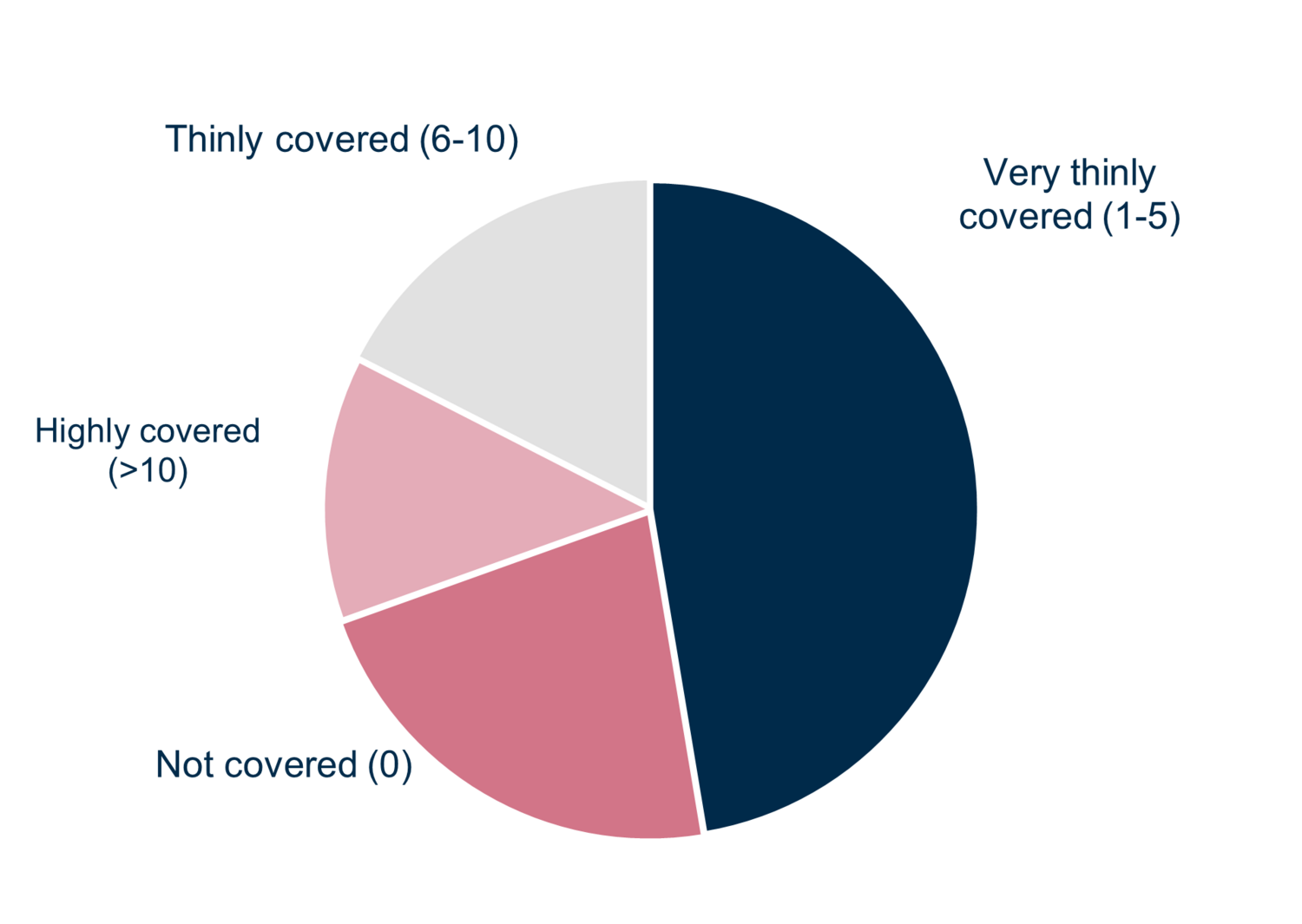
If the fundamental case for these businesses is so strong, one must ask why they remain so undervalued. The answer lies in a profound information vacuum. Over the last decade, research resources have increasingly concentrated on the largest companies, leaving thousands of smaller businesses with little to no analyst coverage. While a global tech giant might be scrutinised by 40 or 50 analysts, a European niche leader can have fewer than three. This is a structural inefficiency that active investors can exploit. In a market where every whisper about a US tech giant is instantly priced in, the lack of scrutiny in European small caps allows company fundamentals to diverge significantly from their share prices. This information gap doesn’t just represent a lack of noise; it represents a reservoir of alpha for those willing to do the legwork.
Global equities by coverage (average)
European smaller companies by coverage
The timing for a reassessment of this segment has rarely been more auspicious. Historically, European small caps have performed like a coiled spring, particularly after periods of prolonged underperformance. We are currently emerging from one of the most extreme stretches of small-cap neglect in modern history, driven by a perfect storm of rising interest rates, energy uncertainty and a flight to the perceived safety of US liquidity. But the macroeconomic tide is turning.
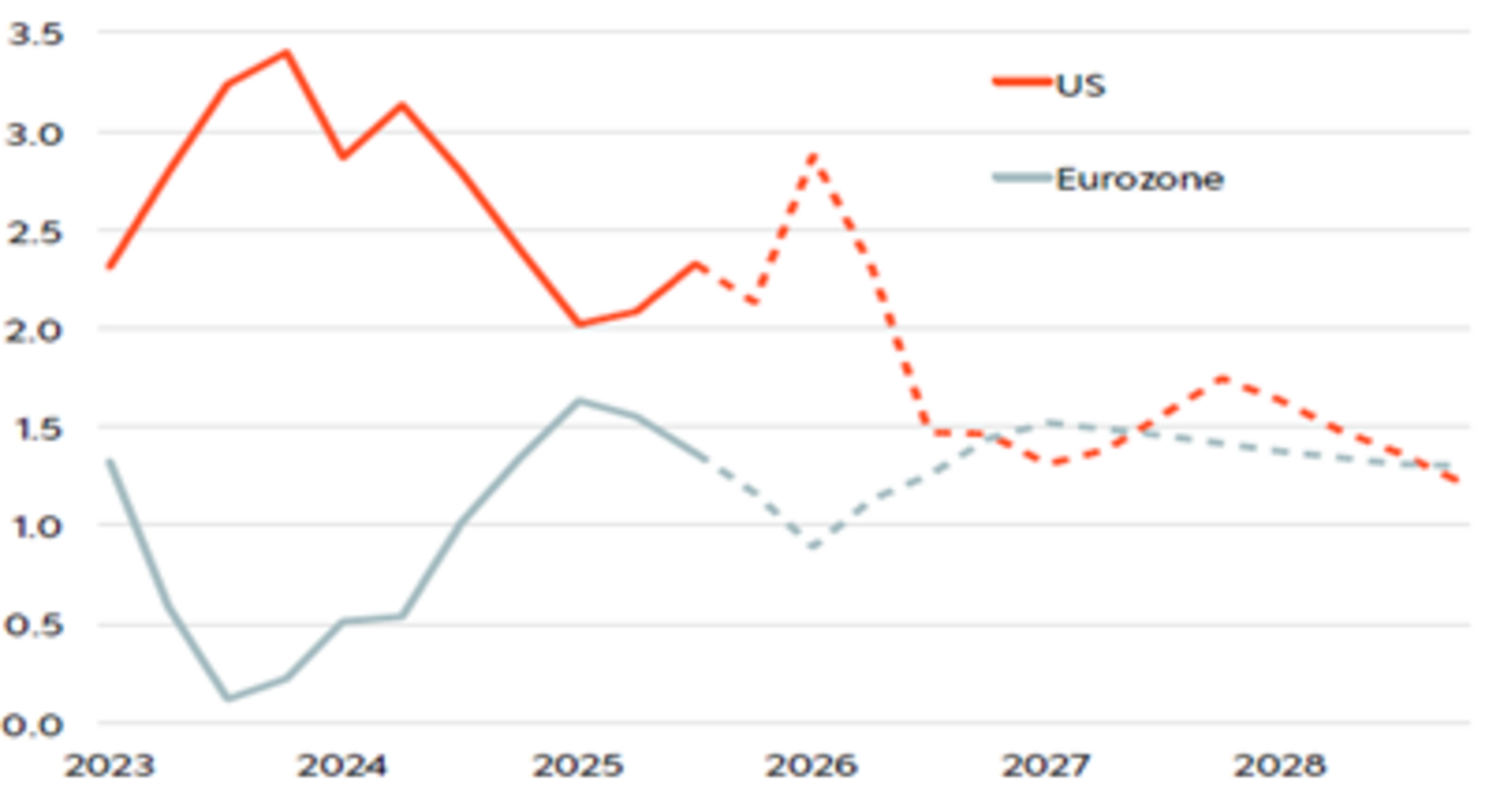
As the growth gap between the US and Europe begins to narrow – with real GDP growth expectations projected to converge by 2027 – the case for geographic diversification intensifies. We are seeing early signs of a regime change, where the market is beginning to penalise over-concentrated, high-valuation trades and reward companies with durable margins and attractive entry points. Small caps, which are typically more sensitive to local economic improvements, are often the first to lead the charge in a recovery phase.
Narrowing transatlantic gap: real GDP growth (%YoY)
Investing in this space, however, requires a surgeon’s precision rather than a broad-brush approach. The European small-cap universe is vast and varied; the disparity between a high-quality global leader and a struggling local business can be wide. Success in this segment is predicated on a selective approach that prioritises balance sheet strength and sustainable competitive advantages.
Ultimately, the investment landscape is moving away from a decade of ‘growth at any price’ toward a period where the price you pay for growth matters immensely. After years of being overshadowed by the gravitational pull of US mega-caps, Europe’s smaller companies are standing in a unique position: they offer the innovation of a growth stock with the valuation of a value play. For those looking beyond the headline-grabbing names of the S&P 500, rediscovering this broader opportunity set may be the most significant investment theme of the coming years. The map of global growth is larger than many realise; it is time to look at the parts that have been left off the charts.
IMPORTANT INFORMATION
The content on this page is intended for professional investors only and should not be relied upon by retail or private investors.
This publication is for information, education, and non-commercial purposes only. It is not suitable for readers who have no prior knowledge of financial markets. The views and opinions expressed are those of the named author(s) and may not necessarily represent views expressed or reflected in other Mirabaud communications.
It does not constitute an offer and is not intended to provide investment advice or investment recommendations. Any sectors, asset classes, securities, regions or countries shown are for illustrative purposes only and are not to be considered a recommendation to buy or sell. This publication is not intended for and cannot be shared with any person who is a citizen or resident of any jurisdiction where the publication, distribution or use of the information contained herein would be subject to any restrictions.
Past performance does not predict future returns. All investment involves risks, including loss of the money invested. Diversification does not necessarily ensure a profit or protect against losses in declining markets. There is no guarantee that any particular asset allocation or mix of investments will meet given investment objectives or generate a given level of income. Exchange rate changes may cause the value of any cross-border investments to rise or fall. In general, investments in stocks and bonds are subject to risks such as country/regional risk, issuer, volatility and currency risk, which are not necessarily addressed herein. Do not base any investment decision on this publication alone.
This publication has been prepared without taking into consideration the objectives, financial situation or needs of any particular investor or type of investor. Neither the issuer nor its affiliates accept liability for any loss incurred in connection with the use of the information available in this publication. The sources used are deemed reliable. However, the accuracy or completeness of the information cannot be guaranteed, and some figures may only be estimates. Statements of facts, opinions, estimates, analysis or conclusions contained herein are provided in good faith and without obligation to update, revise or complete. They are subject to change without notice and may be revised at any time. This material may include projections, forecasts, and other forward-looking statements which are hypothetical in nature. They involve certain risks and uncertainties that could cause actual results to differ from those stated herein.
Mirabaud Asset Management, all rights reserved. Partial reproduction subject to proper quoting, full reproduction subject to MAM prior consent.


Continuer vers
